
Your Cloud Transformation Journey into the Business of Tomorrow
All the highlights, key insights and findings from Modern Business Experience 2018
Welcome to Your Tomorrow, Today
The challenges of change and disruption have become a norm for many businesses today. Just keeping up with what is happening in the market isn’t enough for survival. New competition, the shifting dynamics of a digital market, higher customer expectations and technology innovations are driving the pace and scale of change to unprecedented levels.
Many business leaders who I meet also see opportunities in change and are actively looking for growth and new markets. They want to understand how moving business applications and processes to the cloud can not only increase efficiency, but bring them greater agility and speed to evolve their businesses.
‘Accelerating Your Business in a Competitive World’ contains contributions from thought leaders, stories from businesses already reaping the benefits from their own transformation, and the latest global insights from Oracle. Whether your role is in customer experience, finance, supply chain, human resources or technology, you’ll find many key insights here to help you create your tomorrow, today.
Thought Leadership
Industry Talking Points
Technology continues to transform the way that businesses operate, both in terms of internal process and the way in which they connect with and serve their customers. Innovations around AI, machine learning, automation and Cloud Computing—to name but a few—are bringing what was once thought of as science fiction to the fore as the essential foundations for tomorrow's forward-thinking businesses.
And there's no sign of technological innovation slowing down. So, if your business isn't innovating, it's stagnating. Constellation Research Founder and Chairman, Ray Wang, offers a sobering statistic for those content to rest on their laurels:
So How do You Innovate Through Technology?
The answer lies in how businesses can bring together all the different elements of their operations, making use of technologies such as AI and automation—to 'augment humanity', as Wang puts it—empowering humans to making better decisions and ultimately be more creative and engaged. Underpinning all this needs to be a digital strategy that takes advantage of the power, accessibility, intelligence, autonomy and capability of the cloud.
Of the 7.5bn people in the world
How can we encourage more innovation to change this?
Deloitte Head of Digital Strategy Consulting, Matthew Guest, believes that there needs to be a fundamental shift in how businesses plan for tomorrow and plan for today:
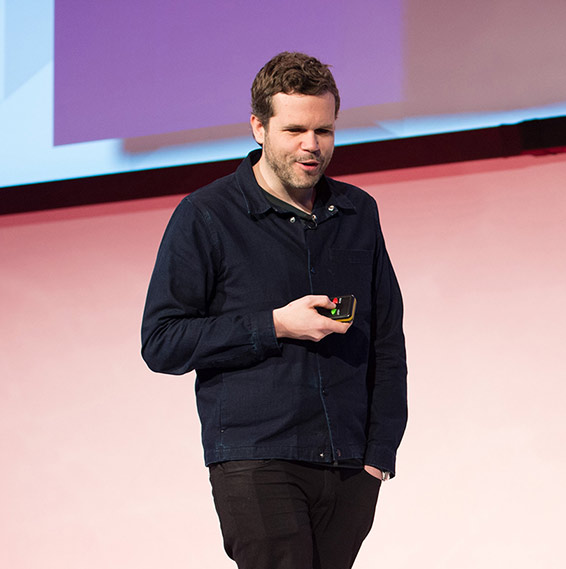
And it all starts with the people within your organisation. “Empowerment enables innovation,” he adds, “if every decision you make today was automated, what would you do with your time?”
Customer Experience
Creating the Connected Customer Experience of Tomorrow, Today
Consumer expectations have skyrocketed in tandem with technological innovation. Businesses are expected to know what, how, when and why to engage with them. Organisations need data that is secure, trusted and highly available; operating models that can decipher this data on the web-scale; and sufficient processing power to execute this at the pace required to satisfy the demands of the modern customer.
Humans can only do a certain amount without the support of technology, and the opportunity to capitalise on AI has never been greater. As Ray Wang has said, one of the key roles of AI will be “augmenting humans to make better decisions”.
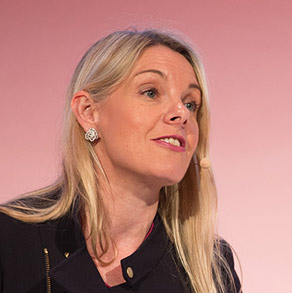
Creating tomorrow's customer experience needs to be an inclusive activity. Understanding the needs of other parts of the business and the different technologies they may be using or looking to adopt is an important consideration. Oracle President of Product Development Thomas Kurian provided an overview of many new CX innovations now entering the market, while CAA Global CEO Anne Marie Forsyth discussed the importance of including stakeholders from across the business when devising a new strategy for customer experience:
Human Resources
How Human Resources can Support Your Digital Strategy
In the face of technologies that can automate many of the tasks and functions that are currently carried out by employees, human resources must address the challenge of managing the concerns and expectations of the workforce, while also seizing the opportunities made available by continued innovation.
AI and job-automation can be anxiety-inducing for many, but instead of viewing technology as a threat, it should be instead embraced as an enabler. Deloitte’s Head of Digital Strategy Consulting, Matthew Guest, recently posed the question:
Matthew Guest
Head of Digital Strategy Consulting, Deloitte
Cathy Brown, company secretary at Engage, is optimistic about how technology can fundamentally improve our working lives, but reminds us of the importance of including employees in your digital strategy:
Cathy Brown
Company Secretary, Engage
In practical terms for businesses seeking to innovate today to move into tomorrow, a shift in thinking is required. Instead of looking at HR as being for the HR organisation exclusively, it should be used as a vehicle to engage employees and managers, developing them by building a culture of learning and growth within the organisation.
To deliver tomorrow’s HR function today, the key is to make it self-service—providing all the relevant information to the employee and the manager, right when they need it, all the time.
Technology Leadership
The Tech That Will Transform Your Future Business
Any organisation seeking to embark upon a cloud journey in order to create their tomorrow today, needs to be clear about the role played by IT. No longer just the support team to make sure that everyone's email is working correctly, IT and tech leadership have a hugely important function in the context of the wider organisation.
As other parts of your business transform, new technologies and working methodologies will give rise to additional data sources and dependencies, which in turn present new opportunities. The task of IT is to harness this influx of data by making use of the likes of AI and machine learning to deliver new insights and data driven innovation.
Making sense of all the information around you puts your organisation in the best position to respond with agility and remain competitive. For Martin Drake, director at Drive Software Solutions, technological innovation presented an opportunity to fundamentally change how they operated, and address new markets:
Martin Drake
Director, Drive Software Solutions
Remaining compliant while offering every corner of the business the information, tools and capabilities to execute their functions—all in the face of increasingly challenging budgets—is another challenge.
The autonomous platform from Oracle allows business to use the technology without having to manually operate it. There’s no need to configure the database, patch it, upgrade it, tune it, back it up, encrypt it, or enable disaster recovery.